

We will build AI solutions for enterprises. Many of our clients are owned by private equity firms. When we tell them their AI costs are about to spike, they do not just nod and move on. They ask harder questions than that.
Last week, on May 14, 2026, GitHub and Anthropic made moves that should concern anyone building AI into their business model. This is not a pricing tweak. This is the end of the subsidization era that defined the past three years.
What Actually Changed
GitHub Copilot is ditching its flat-rate Premium Requests model on June 1. Instead, every plan now runs on AI Credits based on token consumption. The $10 Pro plan includes $10 in credits monthly. Same price, but now there is a ceiling.
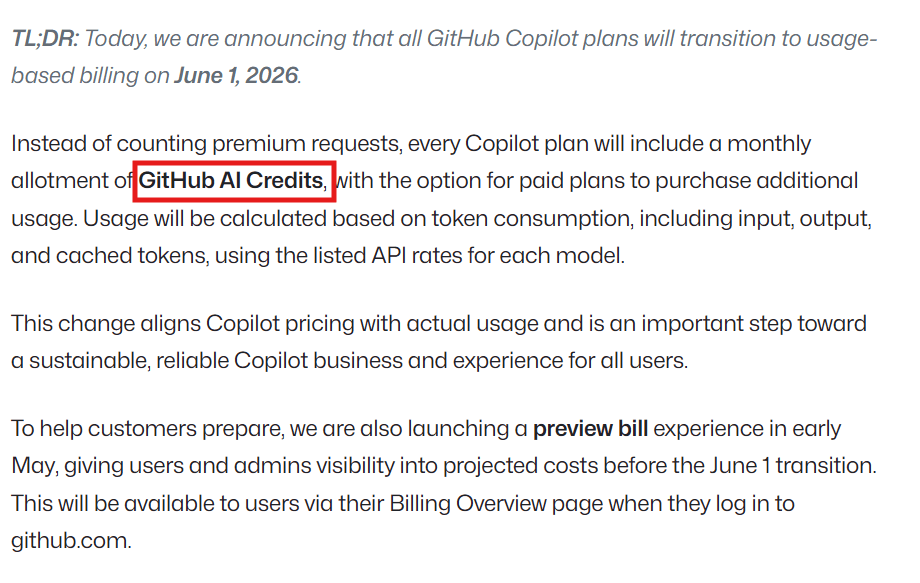
Anthropic went further.
Their $200-a-month Max plan became popular because developers routed it through third-party agentic tools like OpenClaw, running autonomous coding agents around the clock on a subscription designed for conversation.
Based on published rates, a heavy user could be paying $200 for what would otherwise cost up to $5,000 without a subscription. On June 15, that loophole closes.
The developer's reaction was swift. We saw posts calling the changes "gaslighting" on social media. Some announced they would migrate to OpenAI's Codex. Sam Altman responded by offering two free months of Codex to anyone switching from Anthropic. This is a pricing war fought in public.
Why This Is Happening Now
Three targets are converging here, and understanding them matters for anyone making procurement decisions.
The first is agentic AI and its cost profile. A person chatting with Claude might send 50 to 100 prompts per day. An autonomous coding agent generates thousands of requests, runs tests continuously, browses the web, and recursively calls models all day. The cost difference between chat-based and agentic usage is dramatic, and flat-rate pricing cannot absorb it.
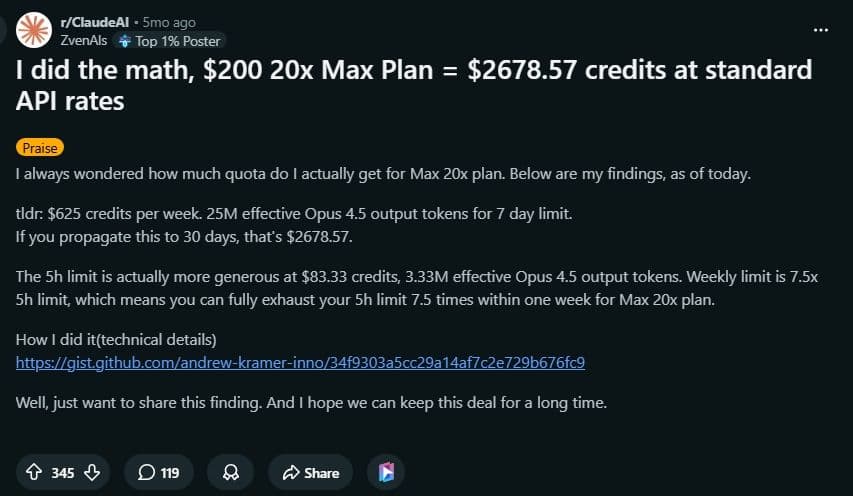
This is very true because, for a $200/month Claude code Subscription, a Reddit user analyzed and found they were getting $ 2,678.57 in credits at standard API rates.
The second is IPO readiness. Both OpenAI and Anthropic are targeting listings in late 2026.
OpenAI raised $122 billion at an $852 billion valuation. Anthropic surpassed $30 billion in annualized revenue. Both are still burning cash at extraordinary rates.
When they file their S-1s, public market analysts will demand unit economics that make sense. Usage-based billing is the fastest way to show revenue that scales with actual demand.
The third is the enterprise contract transition that was already underway.
Anthropic started renewing enterprise customers under usage-based plans around November 2025. By February, the company introduced a single $20-per-employee monthly seat covering all tools, with token consumption billed separately at API rates. Legacy plans are being phased out for new contracts. The old flat-fee enterprise seat is done.
The Numbers Are Already Breaking
We advise enterprises on their AI infrastructure. The conversations have changed dramatically in the last six months.
Uber exhausted its full 2026 AI budget by April, with its CTO telling The Information he was "back to the drawing board" because the allocated funds were already spent.
The company had promoted Claude Code and Cursor to engineers, complete with internal leaderboards tracking usage. By February, usage had doubled, and by April, 84% of developers were classified as "agentic-coding users," driving monthly API costs to $500–$2,000 per engineer.
ServiceNow encountered the same issue, with its CIO calling the rapid cost increases a "tough management problem", making it the second major company to admit it exhausted its entire annual Anthropic budget in Q1.
Even Meta and Shopify monitor employee token consumption through internal rankings, while Nvidia’s Jensen Huang said he’d be "deeply alarmed" if a $500K engineer wasn’t spending at least $250K on compute.
The core issue? When companies measure AI adoption by usage volume, employees prioritize the metric over outcomes. The same thing was said by Databrick’s CEO.
What This Means for Enterprise Buyers
If you are an enterprise, pay attention.
Your legacy flat-rate seats are done.
Anthropic's $ 200-per-month Enterprise plans are being replaced by $ 20-per-seat plans with usage-based API billing. This is a structural change, not a promotional offer. The old model, where you could budget $200 per employee per month and call it done, is over.
GitHub Copilot Business is getting $30 in credits per user through August as a promotional offer, up from $19. But that is temporary. After August, the math changes.
Here’s what Subscription vs Credit Pricing Looks like in an Overview:
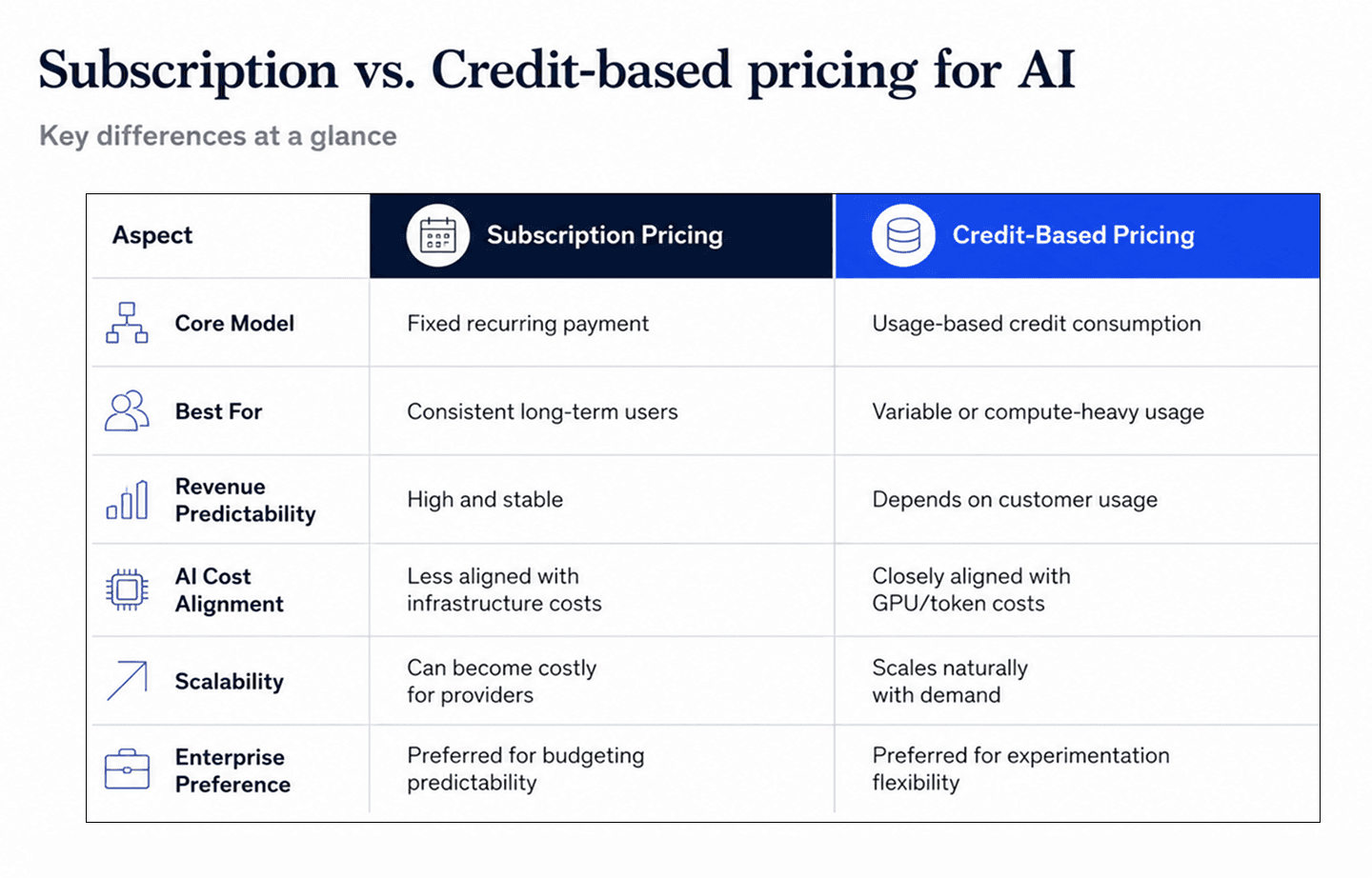
For private equity-owned companies, this creates particular pressure. PE sponsors have quarterly reviews, and they want predictable costs. Moving from fixed monthly fees to variable metered billing creates volatility that is harder to forecast. This is not something you can delegate entirely to IT.
The Stealth Price Increases Nobody Noticed
When Anthropic released Claude Opus 4.7 in April, the per-token rates stayed identical. But Opus 4.7 shipped with a new tokenizer. The same input now generates up to 35 percent more tokens.
For enterprises that migrated without benchmarking, bills climbed by as much as 27 percent with no visible change to the pricing page. That kind of repricing does not show up in an announcement blog post. It shows up on the invoice three months later.
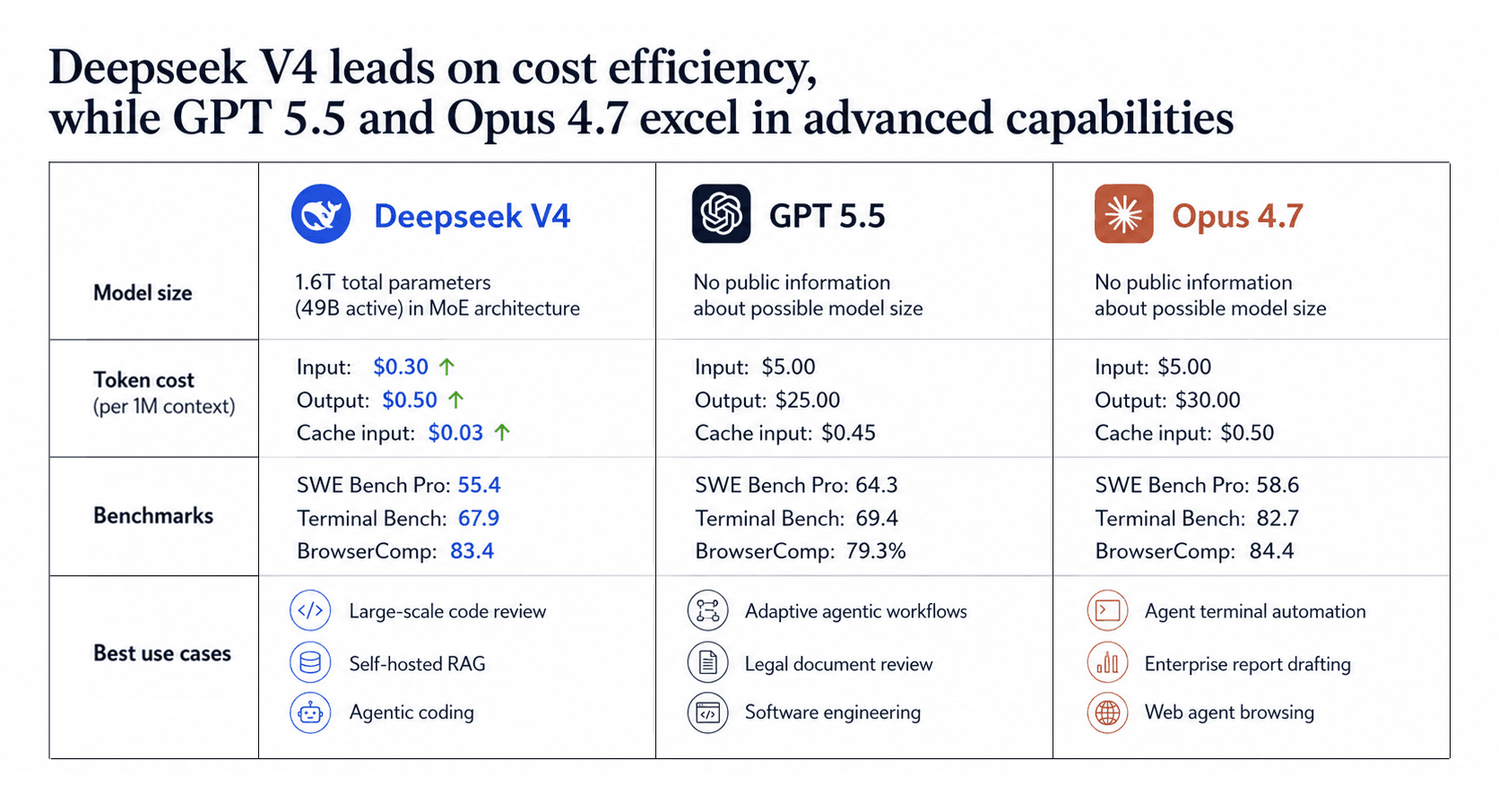
We also guide enterprises to adopt openweight models that deliver higher value without pricing changes, while offering similar power.
What We Are Telling Our Clients
We work with enterprises and PE-owned companies on their AI infrastructure. Our advice has gotten more specific.
- Audit current token consumption across all AI tools to gain visibility into spending by teams and projects.
- Estimate future model costs at 2–10× current prices to uncover hidden expenses beyond flat-rate models.
- Build vendor optionality to avoid lock-in with a single provider’s pricing model.
- Initiate the budget conversation with the CFO early; bills are coming, and planning is critical.
- Treat AI spending like cloud infrastructure: it demands ongoing monitoring, governance, and optimization.
The Bottom Line
The subsidy era ended with a press release on a Wednesday in May, followed immediately by a competitor offering two free months to poach users who noticed.
For companies that built load-bearing workflows on unlimited AI access, the bill is coming. If you are an enterprise buyer, now is the time to get serious about understanding your AI costs. The alarm went off. The question is whether your organization heard it.