
TLDR;
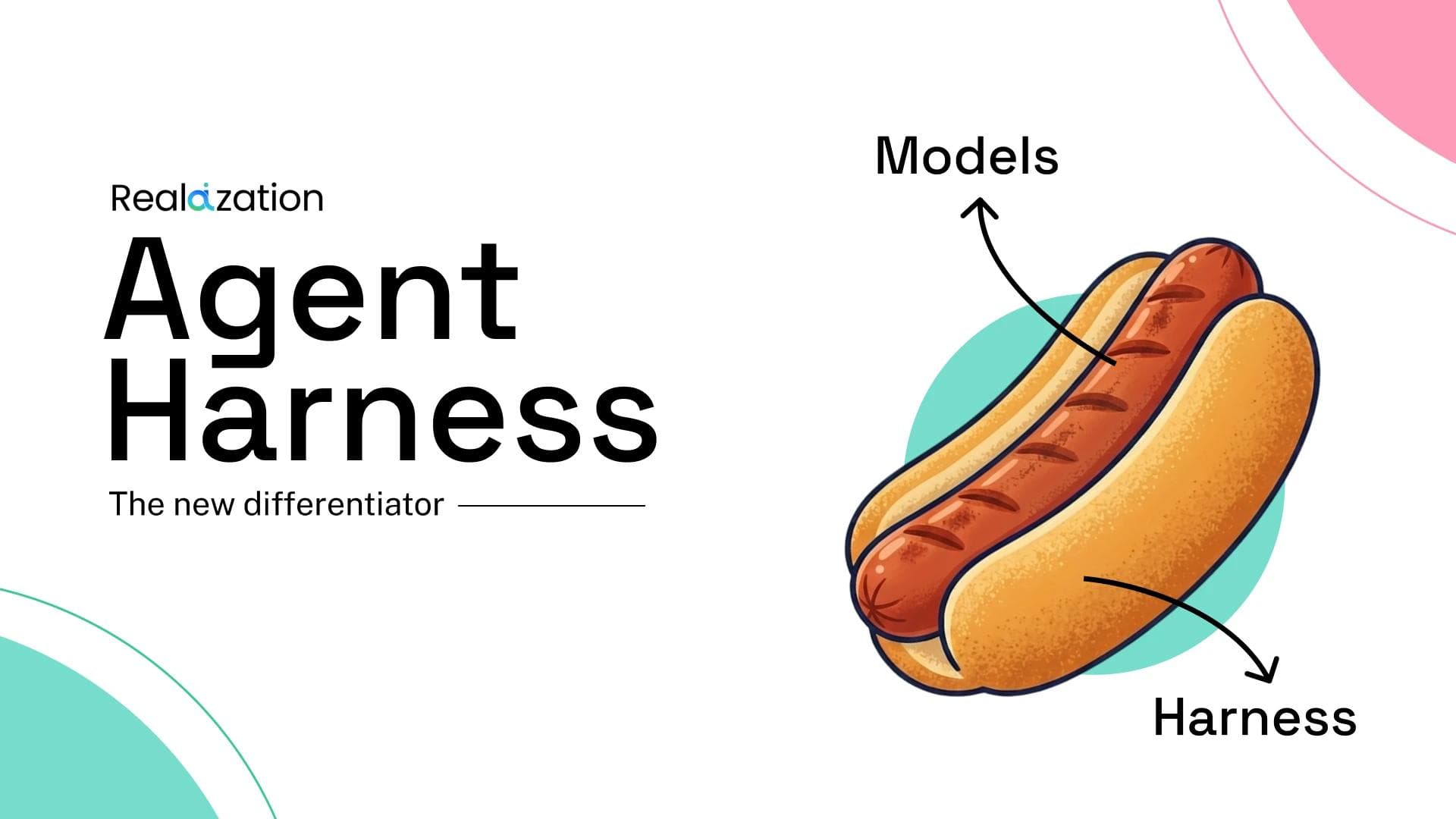
In the world of AI, the model is the hot dog, packed with flavor, potential, and raw power. But what good is a hot dog without the bun? It is edible, of course, but just to fill you up; if you add spices and bread on top of it, it becomes a delicacy rather than just a simple meal.
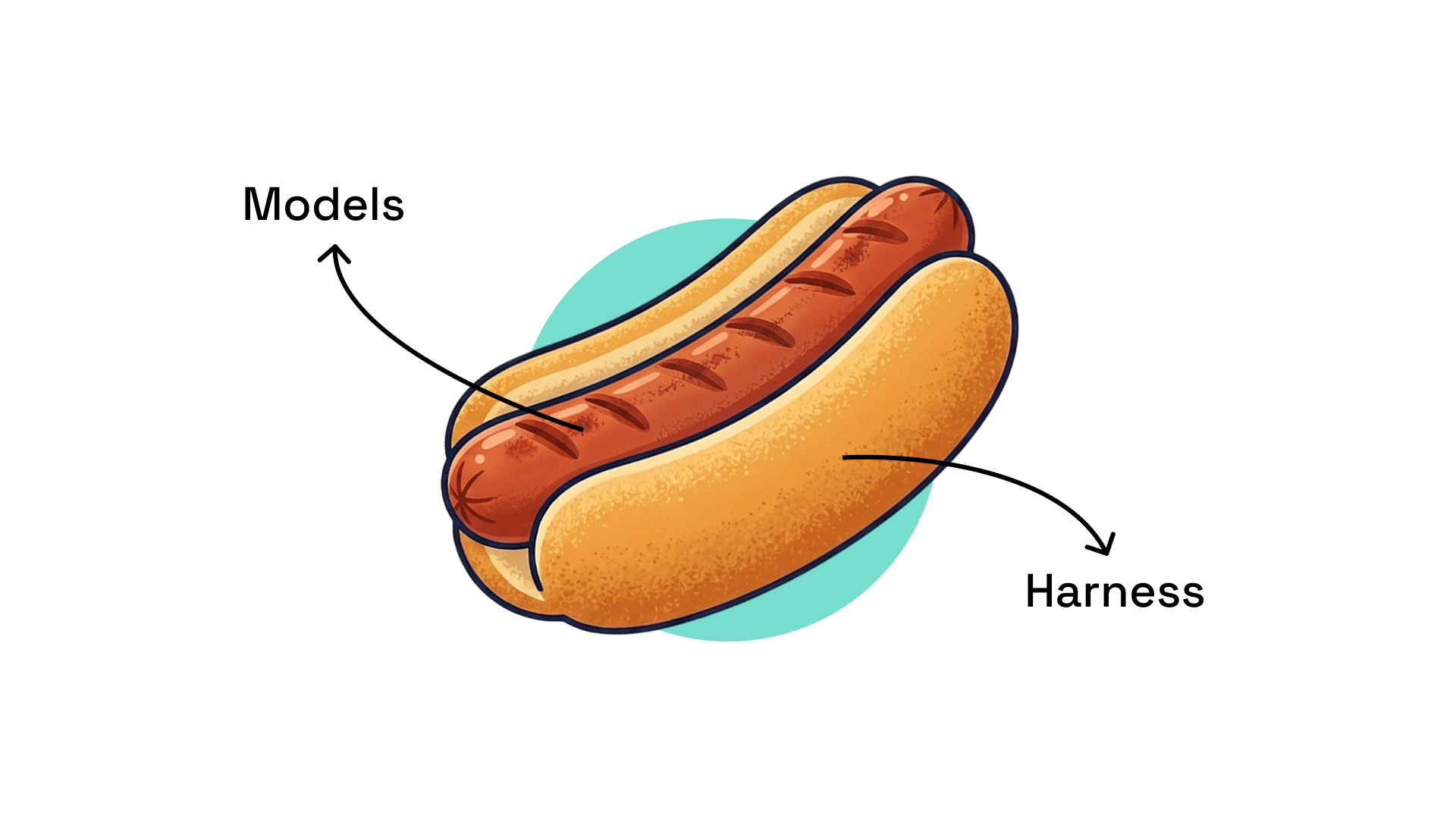
That’s where the agent harness comes in; it’s the bun (and everything else) that wraps around the model, turning it from a loose, powerful idea into a complete, functional, and scalable system. The bun isn’t just a simple piece of bread; it’s the frameworks, tools, orchestration, memory, safety checks, and integrations that make the hot dog (the model) actually usable in the real world.
Key Takeaways
- AI agent harnesses are comprehensive infrastructure layers that wrap around AI models, managing orchestration, tooling, memory, and safety.
- They address fundamental gaps in AI's ability to handle long-running, multi-step, and tool-oriented tasks beyond isolated model inference.
- As AI models become commoditized, harnesses emerge as the primary differentiator enabling scalable, production-grade AI implementations.
- Industry leaders (Microsoft, Salesforce, LangChain) and research validate that harnessing accounts for up to 80% of AI project effort and value by 2026.
- The future points to harnessing evolving into standardized operating systems for AI agents, integrating compliance, modularity, and human-agent collaboration.
Introduction
The AI world today shows a clear contradiction.
AI models, especially large language models, have become much more powerful and intelligent.
Yet most companies still struggle to use them in real, everyday work. They remain stuck at the testing stage and cannot move to full production.
The biggest problem is not the AI models themselves.
The real issue is the supporting system around them. This system helps AI agents work reliably in complex real-world tasks.
This supporting system is now called the AI agent harness.
What Is an AI Agent Harness?
An AI agent harness is the software infrastructure that envelops an AI model or agent, managing everything except the model itself. It is the architectural system that governs how the agent operates, ensuring reliability, efficiency, and steerability in complex environments.
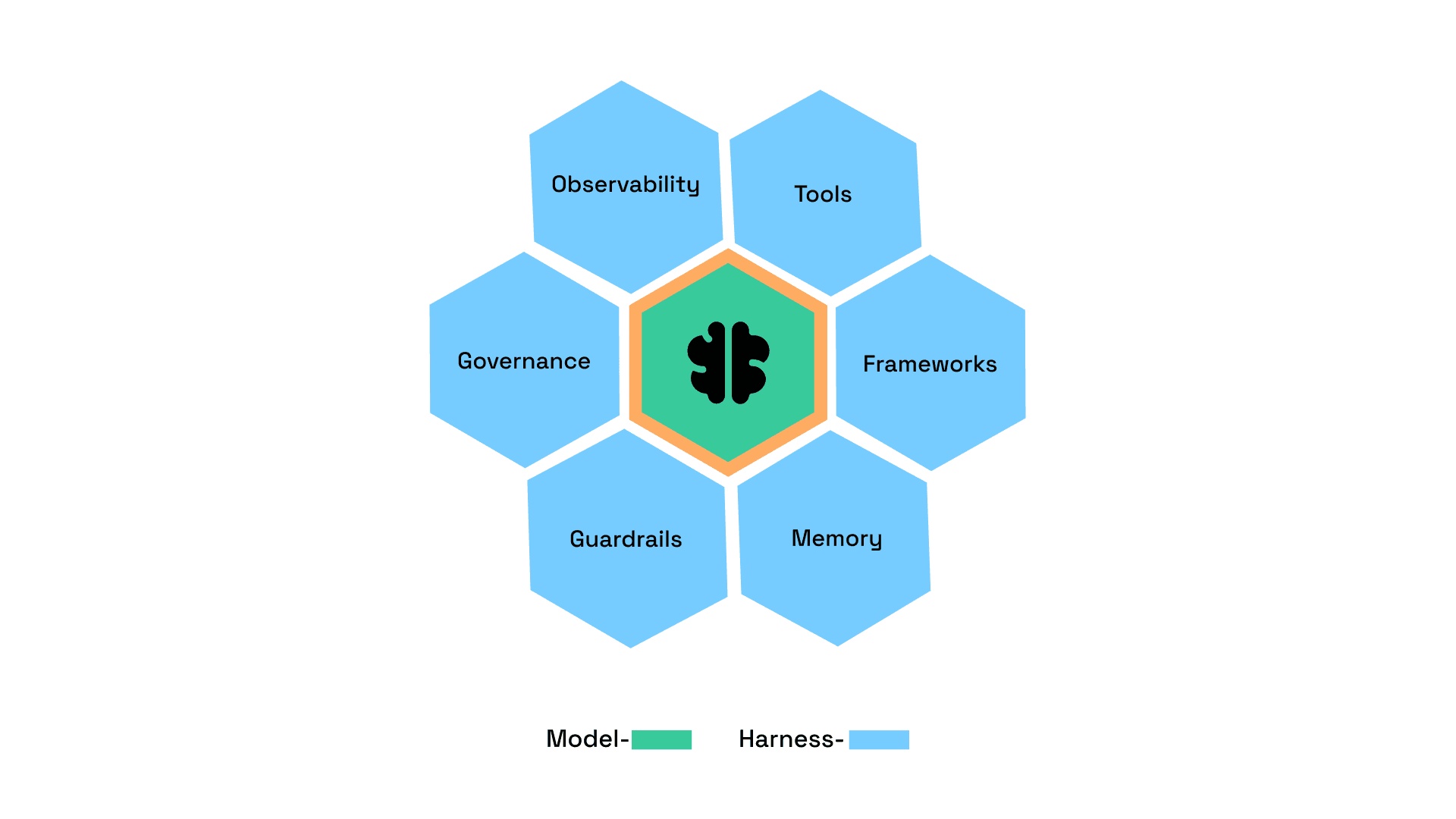
The harness concept arose from the recognition that AI models alone are insufficient for real-world tasks that require memory, tool use, planning, and long-horizon execution.
Core Components
Orchestration: Managing Multi-Step Workflows
Harnesses orchestrate complex workflows by breaking down high-level user intents into sub-tasks and managing dependencies between them. This orchestration layer ensures that AI agents operate cohesively across multiple steps, maintaining context and continuity.
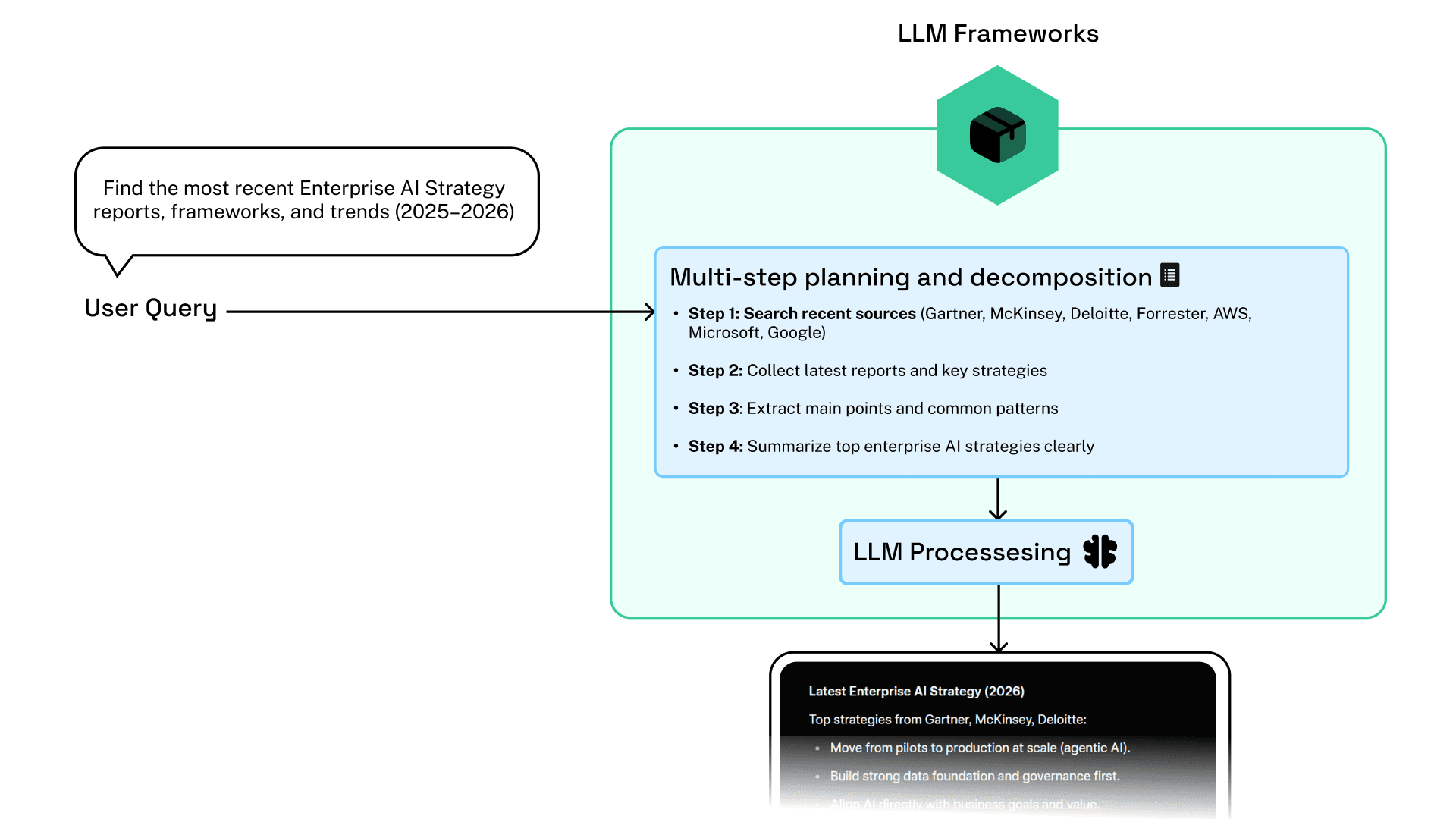
For example, Microsoft's Agent Framework employs orchestration to sequence tasks, handle retries, and manage fallback logic, essential for enterprise-grade AI applications.
Tooling and Integrations: Connecting Agents to the Real World
A core function of the harness is to connect AI agents to external tools, APIs, databases, and proprietary systems. This tooling layer enables agents to perform actions beyond text generation, such as:
- Web searches
- Database queries
- Code execution
- Connecting with Cloud Providers for Deployment
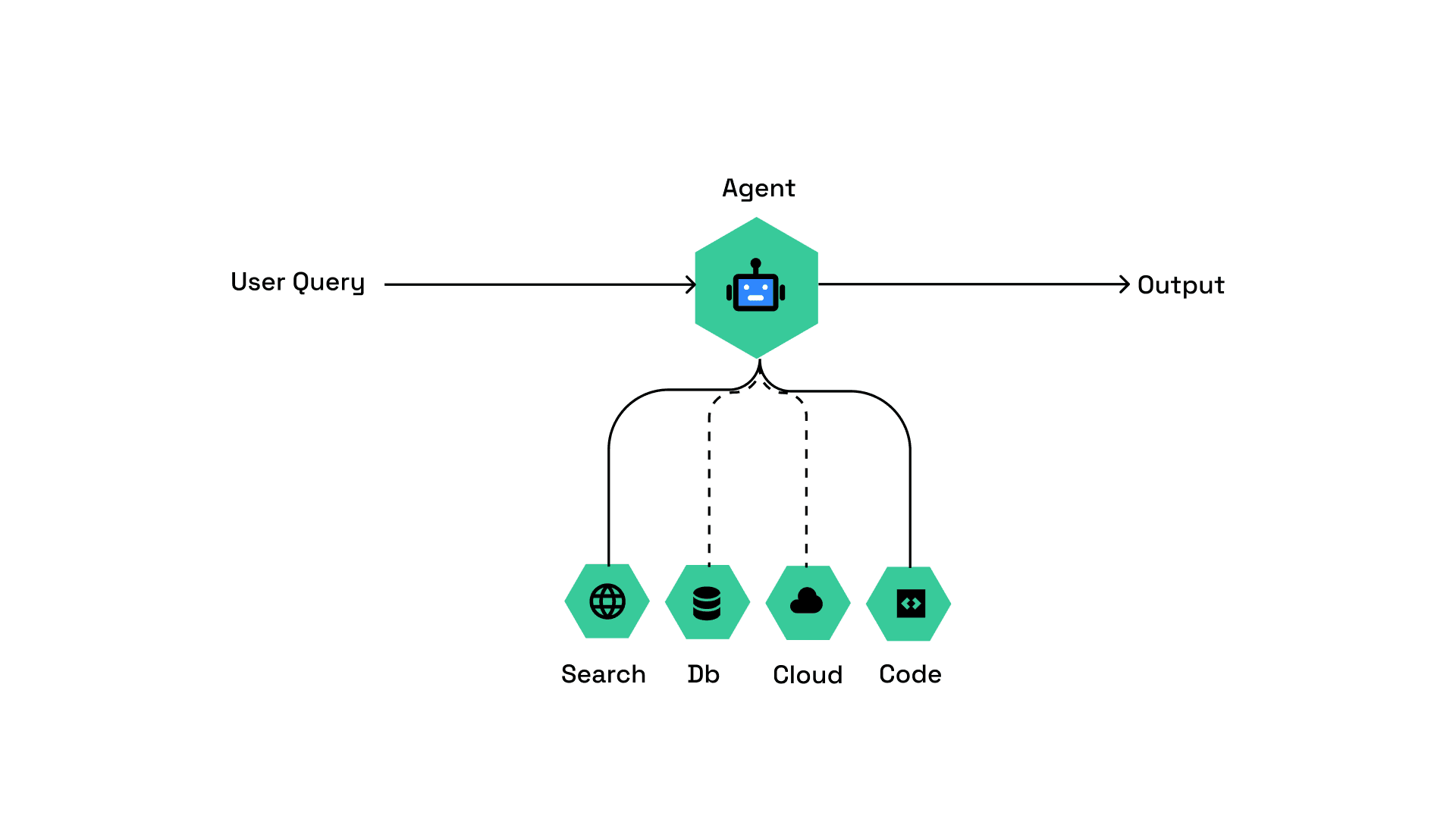
LangChain's modular tooling approach exemplifies how plug-and-play integrations within a harness can dramatically expand an agent's capabilities without retraining the model.
Observability and Debugging: Visibility into Agent Behavior
Harnesses provide observability by logging, tracing, and monitoring agent behavior, enabling diagnosis of failures or inefficiencies. This is critical for compliance, iteration, and maintaining production reliability.
Salesforce's AgentForce highlights how enterprises prioritize observability to ensure agents operate within defined boundaries and escalate issues when necessary.
Observability and Governance: Enforcing Guardrails
Harnesses enforce observability guardrails such as:
- Rate limiting
- Monitoring and logging
- Performance tracking
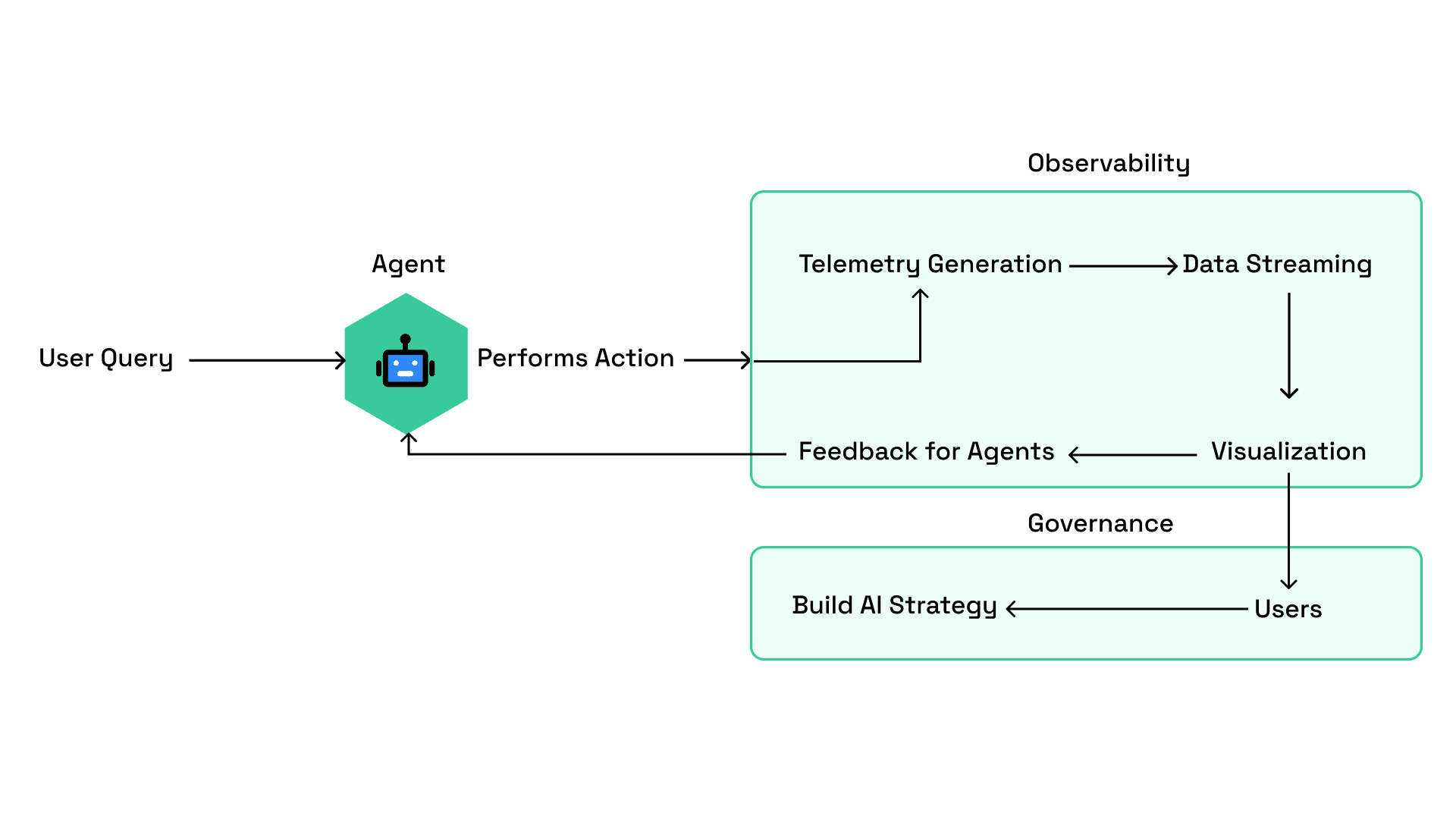
These governance mechanisms provide visibility into agent actions, help detect issues early, and ensure compliance with organizational policies and regulations. This is increasingly important as agents operate autonomously in high-stakes environments.
Why Harnesses Will Define the Next Phase of AI
The strategic importance of harnesses is rooted in the operational gaps that plague most AI projects today. While models excel at isolated tasks, they often fail in production due to lack of infrastructure supporting continuity, tool access, and workflow management.
Model-First vs. Harness-First Approaches
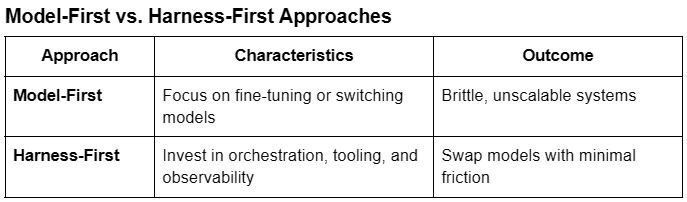
Organizations fixated on fine-tuning or switching models without investing in harnesses often end up with brittle, unscalable systems. Focusing solely on upgrading from GPT-4 to Claude 3 without a robust harness leads to systems that break under real-world complexity.
In contrast, teams adopting a harness-first approach invest in orchestration, tooling, and observability, enabling them to swap models or expand use cases with minimal friction. This approach is projected to account for 80% of AI project effort and value by 2026.
The Harness as a Competitive Moat
As open-source models proliferate (e.g., Llama 3, Mistral), the harness becomes the primary source of proprietary advantage. Companies like Salesforce and Microsoft are positioning their harnesses as platforms that lock in customers through ecosystems of tools, integrations, and workflows.
Startups building vertical-specific harnesses (e.g., healthcare, finance) will outcompete those focused solely on model innovation by offering domain-specific tooling and sticky, defensible products.
Challenges and Considerations in Harness Adoption
While harnesses offer transformative benefits, they introduce new layers of complexity and operational demands.
Complexity and Skill Gaps
Harnesses require managing state, retries, fallback logic, and modular components — which many teams are ill-equipped to handle. The emerging role of "agent engineers" or "harness specialists" highlights the need for new skills focused on system design rather than just model tuning.
Vendor Lock-in vs. Open-Source Flexibility
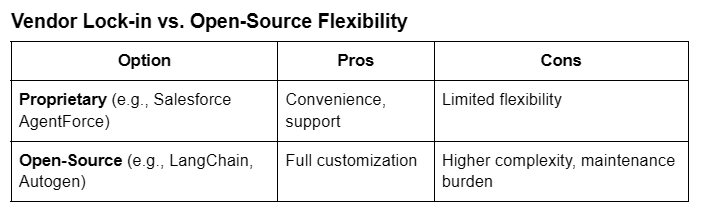
Organizations must balance these trade-offs based on their strategic priorities and resource constraints.
The Future: Harnesses as the Operating System for AI
Within five years, harnesses are expected to evolve into operating systems for AI agents, abstracting away the complexity of multi-agent workflows much like Kubernetes did for containerized apps.
Harness Marketplaces
Platforms will emerge where organizations can "plug in" pre-built agent workflows (e.g., customer support, fraud detection) without reinventing the wheel — accelerating development cycles and reducing costs.
Regulatory Compliance as a Feature
Harnesses will embed audit trails, bias detection, and explainability by default, making them essential for regulated industries like finance and healthcare to meet stringent compliance requirements.
Hybrid Human-Agent Workflows
Harnesses will seamlessly blend human oversight with autonomous agent actions, enabling "human-in-the-loop" systems at scale that combine the strengths of both human judgment and AI automation.
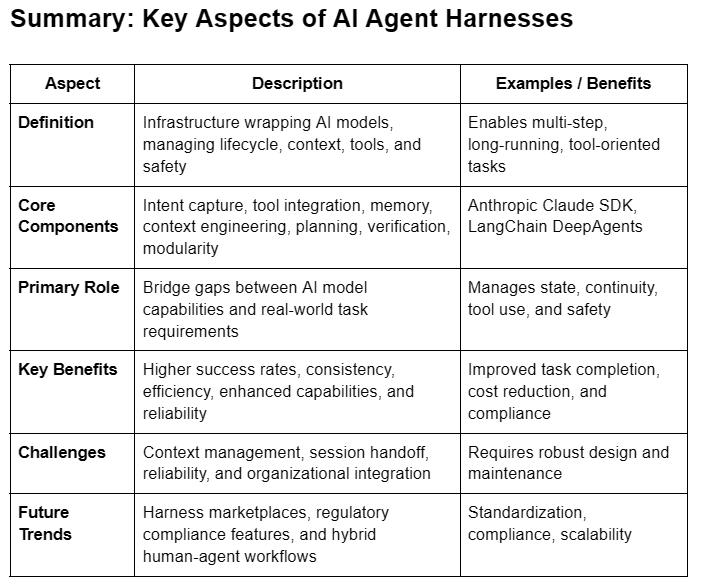
Summary: Key Aspects of AI Agent Harnesses
Conclusion
AI agent harnesses have rapidly evolved from a conceptual necessity to the cornerstone of successful AI implementation projects. As AI models continue to advance in capability, the harness, encompassing orchestration, tooling, memory, and safety, will increasingly determine whether AI projects remain experimental or mature into scalable, production-grade features.
The harness is the chassis, transmission, and control system that transforms a high-performance AI engine into a functional, reliable, and efficient vehicle for real-world applications. Organizations that invest in harness engineering will gain a competitive moat, enabling them to deploy AI systems that are robust, adaptable, and aligned with human intent and regulatory demands.
In essence, the agent harness is the critical layer that makes AI agents truly work in practice.
Sources/Learning List